
Yes, resident Indians can invest in GIFT City by utilizing SEBI-registered Alternative Investment Funds (AIFs) and selective offshore structures, based on certain eligibility criteria and minimum investment requirement of ₹50 lakh and above. The GIFT City ensures a highly efficient, tax-efficient, dollar-denominated way of investing in Indian equities via regulated and compliant channels, managed by IFSCA and SEBI.
Investing in GIFT City has become one of the most discussed Indian investment avenues for a very valid reason. However, a frequently asked question by HNIs, NRIs, and family offices looking at this avenue is whether Indian residents can invest in this platform, as it is an offshore structure that seems only accessible to foreign investors.
The answer is yes, however, the structures and eligibility are different from what NRIs have access to. In this article, we will see how GIFT City works and what investment avenues are available for Indian residents and how a SEBI-registered portfolio manager such as Chanakya Capital can be of assistance in this regard.
What is GIFT City and how does it work?
The GIFT City stands for Gujarat International Finance Tec-City and is the first ever working International Financial Services Centre (IFSC) in India. This has been established to develop India with a world class financial hub that will enable Indian and foreign entities to carry out transactions in foreign currencies within a regulatory framework designed especially for cross border finance transactions.
The essentials at a glance:
- India’s first operational IFSC, located in Gujarat
- Transactions are largely in foreign currency rather than rupees
- Open to both Indian and foreign participants, subject to eligibility
- Built around a regulatory regime designed for cross-border finance
Financial activities in GIFT City are regulated by the International Financial Services Centres Authority (IFSCA), whereas the operations of portfolio managers and fund structures in this domain continue to be regulated by SEBI. Thus, the investor receives a legitimate and compliant structure instead of an informal offshore operation.
GIFT City's Role in India's Financial Landscape

Investment Opportunities for Indian Residents in GIFT City
Resident Indian investors have fewer but still quite substantial options to get into GIFT City than NRI investors who enjoy more freedom of investment through the AIF structure in dollars. Here are the current possibilities.
Alternative Investment Fund (AIF) Structures
Among the primary means by which eligible investors are able to gain access to the Indian stocks through the offshore-type structure while staying within the regulations of SEBI and IFSCA is the Category III AIFs registered in GIFT City. The AIF structure tends to pool money into the actively managed concentrated stock portfolio.
Portfolio Management Services (PMS) Through GIFT City Platforms
Additionally, portfolio management services continue being available to resident investors via conventional domestic channels. While PMS itself isn’t routed through GIFT City in the same way AIFs are, resident investors exploring GIFT City often do so alongside a domestic PMS allocation, using both structures to diversify how they hold Indian equities.
Eligibility Criteria and Minimum Investment Requirements
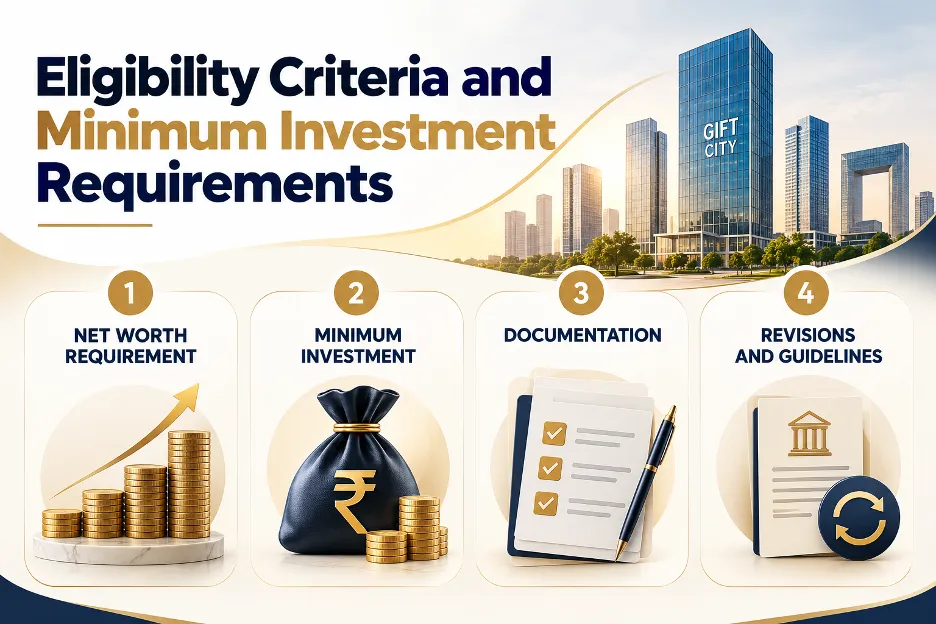
The eligibility criteria for GIFT City AIFs and PMS schemes is generally limited to investors who have reached certain net worth levels and investment minimums. The rationale behind such minimums is that the regulator seeks to ensure that such schemes are meant for investors capable of taking risks related to equity investments.
Before you apply, check the following:
- Net worth:Whether you meet the level the fund or manager requires
- Minimum investment:SEBI registered PMS schemes in India typically have a minimum of ₹50 lakh; our guide to the minimum investment for PMS in India explains how it works
- Documentation:KYC, proof of source of funds, and risk profiling
- Revisions:Contact your portfolio manager directly for any change in these minimums, and refer to SEBI’s investor guidance for disclosure norms
Tax Efficiency Considerations for Direct Equity Holdings
Another benefit worth considering is the impact of different holding structures on taxes. When investments are made through your demat account and not through a fund or other pooled investment vehicle, capital gains are considered as if you yourself were purchasing and selling the securities. It is important to remember that different investment structures, especially if cross-border, will have varied tax considerations. Consulting with your portfolio manager and a tax advisor before making investments is absolutely necessary.
How Chanakya Capital Approaches GIFT City Investing
Chanakya Capital Services is a SEBI registered portfolio manager (registration number INP000006040) providing domestic PMS as well as GIFT City AIFs services to HNIs, NRIs, and Family Offices.
The difference made by Chanakya Capital’s strategy lies in its first principles investing strategy. Instead of diversifying the portfolio over dozens of mediocre companies, they create concentrated portfolios with the best 15 picks constituting around 80% of the portfolio with rigorous, ground-up research for each company. Years of studying management teams precede investment decisions, and the firm’s fund managers are invested with the same capital as the clients’.
For both the residents and NRIs, the implication of this strategy translates to tailor-made equity mandates and not standardised products. The stocks will be held directly in the investor’s own demat account, and the above mentioned points regarding the tax benefits and transparency will apply.
Regulatory Considerations for GIFT City Investments
SEBI Requirements for AIFs and PMS
Both AIF and PMS structures operating from and/or with the help of GIFT City will be regulated by SEBI. SEBI registration will be required along with the compliance of relevant disclosure, reporting, and conduct standards. Any individual can check whether the portfolio manager is a SEBI registered intermediary through the official website of Securities
Compliance Requirements for Resident Investors
Residents would be required to produce KYC documentation, proof of source of funds, and risk profiling during the onboarding process. Since GIFT City follows the regulatory regime of IFSCA for certain structures of funds, the same might be applicable during onboarding. Further details about the regulatory framework can be obtained from the website of IFSCA.
Documentation & KYC Process
Onboarding is done through an identity verification process, setting up a bank account (through NRE/NRO route wherever applicable), executing an investment agreement, and disclosing risks involved. You would be taken through the process of onboarding by a SEBI registered manager.
FAQ
Frequently Asked Questions
What is the minimum investment in GIFT City AIFs?
There is no uniform minimum investment amount; however, minimum investment amounts depend upon the fund type and the fund manager. The minimum investment in any equity investment product registered with SEBI including PMS is usually ₹50 lakh. Please check with the portfolio manager on the exact amount.
How is GIFT City investment taxed for Indians?
Taxation would vary based on the structure you choose. When securities are held directly in the demat account of an investor, then gains are usually treated as normal capital gains. Taxation of pooled AIF would be different. You should consult a tax expert for your particular scenario.
What is the difference between PMS and AIF in GIFT City?
In the case of PMS, securities are directly held in your demat account with visibility of every security and every trade. In AIF structure, the money from all investors is pooled in one fund vehicle. Both can provide access to Indian equities.
How long does it take to approve my investment?
Timelines vary depending on documentation completeness and the specific fund or PMS provider, but the process generally involves identity verification, risk profiling, and agreement execution before funds are deployed. Your onboarding team can provide a specific timeline once documentation is submitted.