


A Systematic Investment Plan (SIP) is useful because it builds the habit of saving and investing, and helps institutions plan their strategy on a continuous basis. But many investors have earned little in recent years, partly due to the market downturn and partly due to the template portfolios of mutual funds. A customised PMS can deploy capital at more opportune times. Banks should also let trained wealth managers sell SIPs, to avoid mis-selling. No version guarantees returns.
Most Indians meet SIPs through their bank, and many start one without asking what it can and cannot do. With recent media reports saying that many investors have hardly made any money, the question is fair: what is the real utility of a SIP? This guide covers its strengths, its limits, and what a customized alternative looks like.
According to the team at Chanakya Capital, a SEBI-registered portfolio manager, “A SIP is a very useful vehicle for common investors, as it inculcates the habit of saving and investing.”
What Is the Utility of SIP?
The Core Strengths
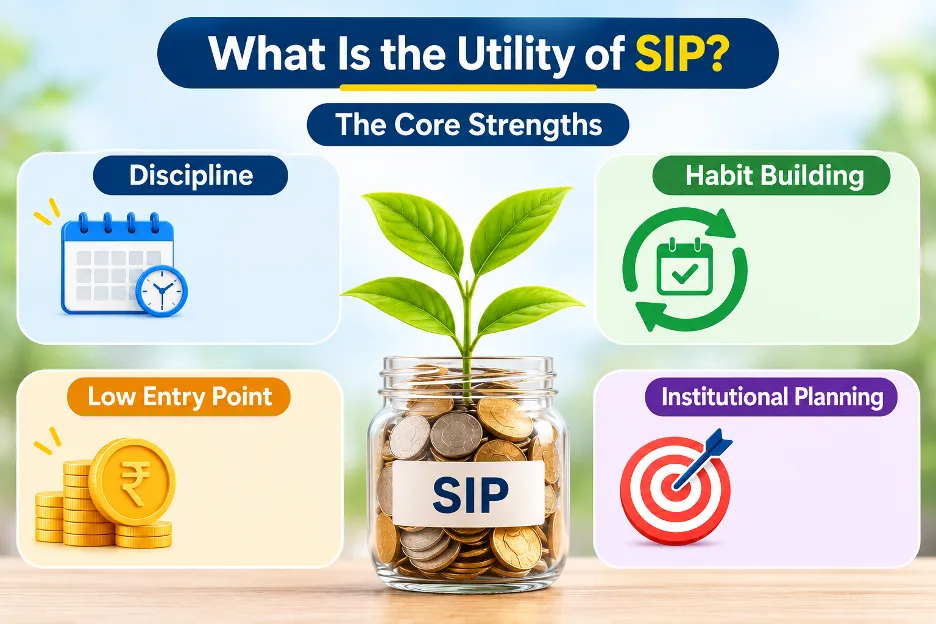
A SIP is useful because of four things:
- Discipline: it invests a fixed amount on a fixed date, regardless of headlines
- Habit building: saving and investing become automatic, not occasional
- Low entry point: many fund SIPs begin at a few hundred rupees a month
- Institutional planning: steady instalments let institutions plan their investment strategy on a continuous basis
The Limits
A SIP does not guarantee returns, protect you from a falling market, or rescue a weak investment. It decides how you buy, not what you buy.
Why Many SIP Investors Have Earned Little Recently
The Market Downturn
Media reports suggest that many investors have hardly made any money in recent years. This is partly due to the downturn in the Indian market. A SIP spreads your cost over time, but it cannot make a falling market rise.
The Template Portfolio Problem
The second reason may be the template portfolio strategy adopted by mutual funds in India. Thousands of investors share one pooled portfolio, whatever their goals, tax position or risk appetite. Every instalment goes into the same basket on the same date, whether valuations are cheap or stretched.
How a Customised PMS Approaches SIP Instalments

In a PMS like Chanakya, each portfolio is customised, so instalments can be invested at the most opportune times. Under portfolio management services, the manager decides when and where to deploy capital, guided by valuations rather than the calendar. Chanakya’s investment process supports this by investing gradually rather than in lump sums.
How It Differs From a Fund SIP
- Portfolio: tailored to you, not one basket shared by thousands
- Ownership: shares sit in your own demat account
- Timing: deployment is guided by the manager’s view of valuations
- Entry: a PMS needs a ₹50 lakh minimum, far above a typical fund SIP
What to Confirm With Your Manager

A PMS is not built around small monthly installments, so the “SIP” element usually means staged deployment of your capital. Before investing, confirm:
- Whether capital is deployed in stages, and over what period
- Whether periodic top-ups are possible
- How your existing holdings and restrictions are treated
The Mis-Selling Risk When Banks Sell SIPs
By and large, SIPs are marketed by banks to their depositors. Bank staff may not be adequately trained in equity and SIP investments to advise them. A fixed-deposit customer who doesn’t understand volatility may quit at the first correction.
It would be helpful if SIPs were marketed by the banks’ wealth managers. Otherwise, there could be instances of mis-selling, as has been the case with insurance products.
Which Route Fits You?
- A fund SIP suits you if you invest from regular income, are starting small, or want simplicity
- A customised portfolio suits you if your surplus meets the minimum and you want a concentrated portfolio with direct manager access, as many HNI investors do
FAQ
Frequently Asked Questions
What is the main utility of a SIP?
It builds the habit of saving and investing, and helps institutions plan their investment strategy continuously. It works best over five years or more.
Why have many SIP investors earned little recently?
Partly because of the downturn in the Indian market, and partly because of the template portfolio strategy of mutual funds, where instalments are not tailored to market conditions.
How is a PMS different from a mutual fund SIP?
A PMS portfolio is customised for each investor, so capital can be deployed at opportune times. A fund SIP follows one common portfolio for everyone.
Can banks mis-sell SIPs?
There is a possibility if staff lack equity training. Asking for guidance from a qualified wealth manager reduces the risk.
Does a SIP guarantee returns?
SIPs are subject to market risk. They build discipline and average your cost, but cannot guarantee profits.
References
- Association of Mutual Funds in India (AMFI): https://www.amfiindia.com
- SEBI Investor Guidance — Portfolio Management Services: https://investor.sebi.gov.in/pms_final.html
-
