

Look for four signs together: falling debt, improving cash flow, a credible management change, and a specific catalyst. A turnaround stock has fallen on bad results, but its business is still sound enough to recover. The price usually moves before the quarterly numbers do. So waiting for two good quarters means missing most of the gain. But most beaten-down stocks never recover. In India, where many listed companies are promoter-run and thinly researched, that gap between recovery and trap is wide.
According to the investment team at Chanakya Capital, a SEBI-registered portfolio manager, “a low price only tells you a stock is cheap. The balance sheet tells you whether it can survive long enough to recover, and most beaten-down stocks fail that test.”
Looking at a beaten-down stock and unsure if it’s a recovery or a trap?
What Signs Show a Turnaround Is Starting?
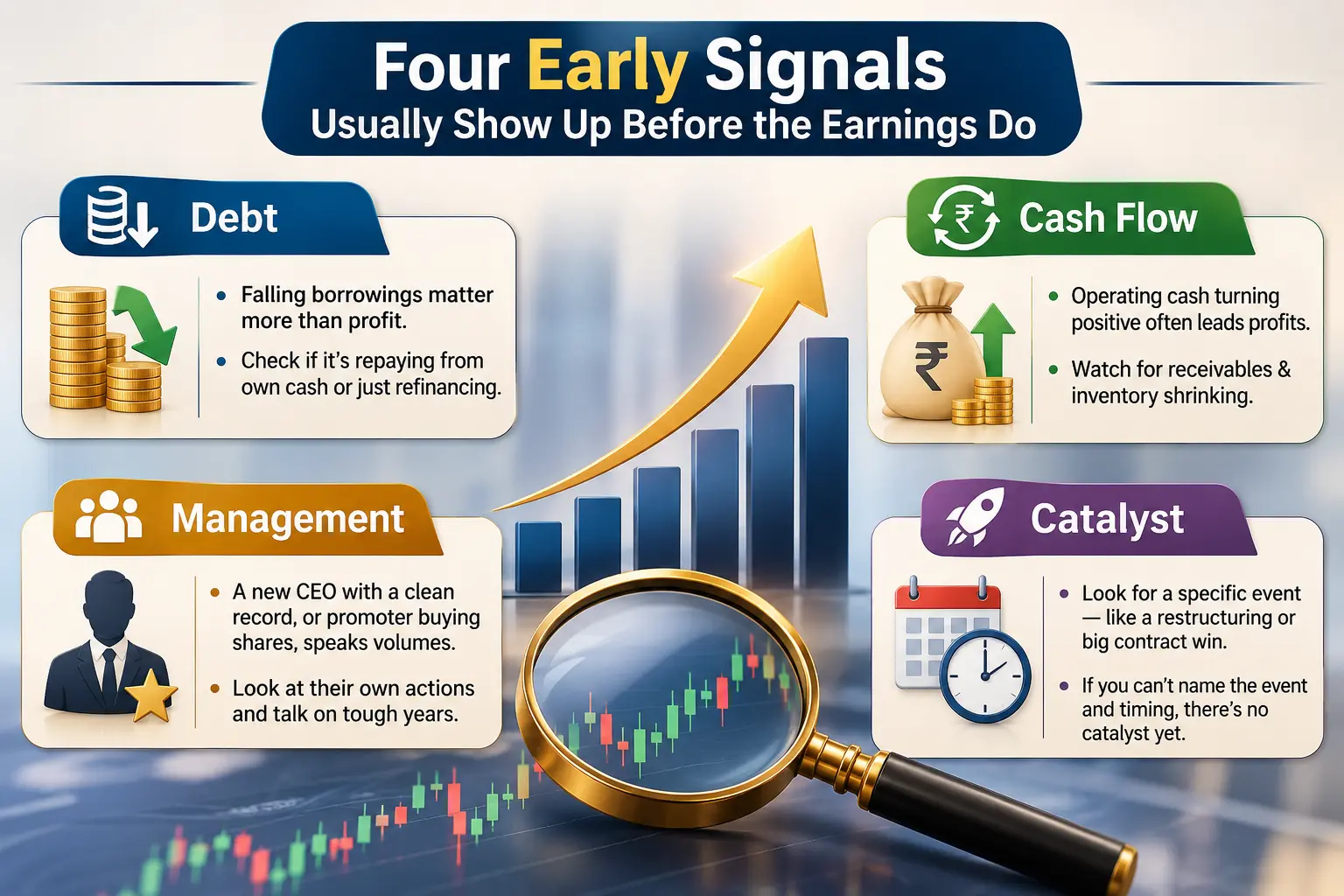
None of these works alone. Spotting them early takes direct research, the kind a concentrated equity PMS is built to do and a screen can’t.
How Do You Tell a Turnaround From a Value Trap?

Traps look exactly like turnarounds at the bottom. And even a good one should stay a measured slice, so how much to allocate depends on the rest of the portfolio.
Why Choose Chanakya Capital?
Chanakya Capital Services Pvt. Ltd. (INP000006040) is a SEBI-registered portfolio manager with 35+ years of combined Indian equity experience, including exposure to 100+ business turnarounds across cycles. The team runs 12 to 18 high-conviction positions for HNIs, NRIs and family offices, through onshore PMS and a Category III AIF at GIFT City.
Turnaround ideas go through the same filter as every other position: balance sheet, cash flow, promoter record and a clear catalyst. Most fail it, and that’s the point. The managers invest their own money in the same portfolio as clients, so a wrong call costs them too.
FAQ
Frequently Asked Questions
What is a turnaround stock?
A company whose share price has fallen on bad results, but whose core business is still sound enough to recover and grow again.
How long does a turnaround take in India?
Often 18 months to four years, depending on how much debt the company carries and when a clear catalyst arrives.
What is the biggest risk in turnaround investing?
Mistaking a cheap, declining company for a recovering one. That’s the classic value trap, and a weak balance sheet is usually the giveaway.
Which financial signal usually improves first in a recovery?
Operating cash flow and debt usually improve first, often a few quarters before reported profits show the change.
