


The minimum investment for Portfolio Management Services (PMS) in India is ₹50 lakh, as mandated by SEBI. This threshold applies at the time of onboarding, covers the full portfolio (not per stock), and can be met through cash, existing securities, or a combination of both. It exists to keep PMS suited to investors who can absorb concentrated, market-linked risk. Meeting the minimum is only the first step choosing a manager whose strategy fits your goals matters just as much.
Many investors first hear about the ₹50 lakh threshold and assume that’s the whole story. In practice, how you fund the account, whether top-ups are allowed, and how the minimum is treated over time all affect the experience.
According to the team at Chanakya Capital, a SEBI-registered portfolio manager, “The ₹50 lakh minimum isn’t a fee or a hurdle, it’s SEBI’s way of ensuring PMS stays a product for investors who understand concentrated equity risk and can stay invested thrAough a full market cycle.”
Not sure if PMS fits your portfolio
size and goals? Schedule a consultation with Chanakya Capital’s fund management team.
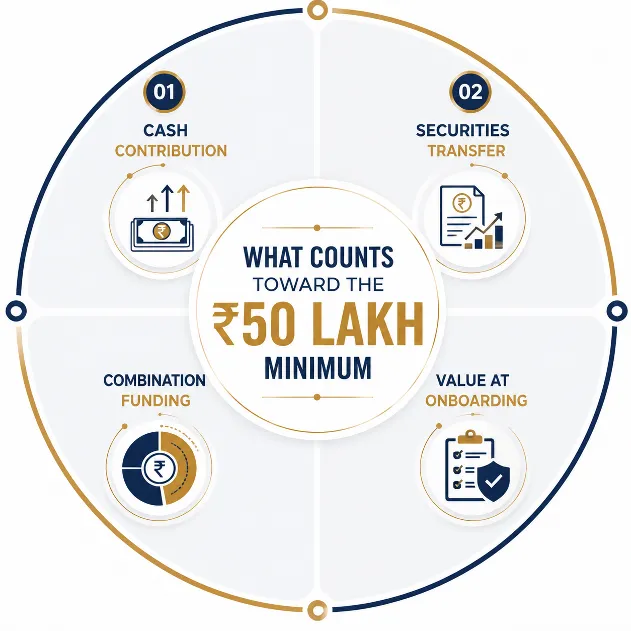
What Counts Toward the ₹50 Lakh Minimum
Cash Contribution: The most common route is a direct cash transfer, deployed into the portfolio gradually rather than all at once.
Securities Transfer: Investors can also transfer existing shares, provided the manager approves them for the strategy. Unsuitable holdings are typically liquidated and reinvested.
Combination Funding: A mix of cash and securities is common for investors moving from a self-managed portfolio into PMS.
Value at Onboarding: Not Ongoing SEBI’s requirement applies to your investment value when the account is opened. If your portfolio later dips below ₹50 lakh due to market movement, you aren’t required to top it up, though most managers recommend maintaining the threshold for the strategy to function as intended
Why SEBI Mandates a ₹50 Lakh Minimum
The rule exists to draw a clear line between PMS and pooled retail products like mutual funds. A concentrated 15–25 stock portfolio carries more volatility than a diversified fund, and SEBI’s threshold ensures PMS investors have the cushion to withstand short-term swings without needing that capital for near-term goals. It also lets managers build genuinely customised portfolios rather than standardised baskets — a principle central to Chanakya Capital’s investment philosophy, which is built around concentrated, high-conviction positions.
Minimum Investment for NRIs and Family Accounts
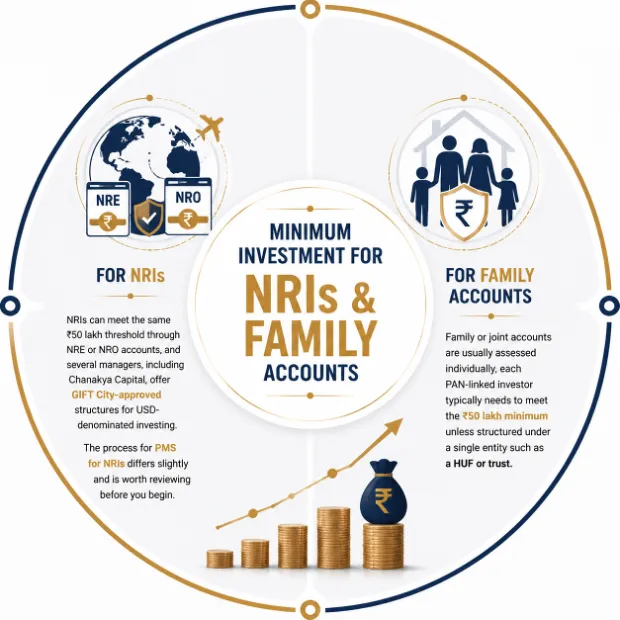
NRIs can meet the same ₹50 lakh threshold through NRE or NRO accounts, and several managers, including Chanakya Capital, offer GIFT City-approved structures for USD-denominated investing. The process for PMS for NRIs differs slightly and is worth reviewing before you begin.
Family or joint accounts are usually assessed individually, each PAN-linked investor typically needs to meet the ₹50 lakh minimum unless structured under a single entity such as a HUF or trust.
How This Compares to Other Investment Routes
Mutual funds have no minimum investment threshold, which is why they remain the default for most retail investors. AIFs (Alternative Investment Funds), by contrast, carry a much higher minimum of ₹1 crore. PMS sits between the two — accessible to serious equity investors without an AIF’s entry barrier. Our overview of Portfolio Management Services covers how concentration and customisation set it apart.
Getting Started Once You Meet the Minimum
Meeting the ₹50 lakh threshold is only the entry point. The next steps — shortlisting a SEBI-registered manager, reviewing their strategy and fees, and completing KYC — determine whether the investment fits your goals. SEBI’s investor guidance is a useful reference for disclosure norms before you commit, and the Association of Portfolio Managers in India maintains a registry of licensed managers worth checking during due diligence.
Ready to explore whether PMS fits your portfolio? Talk to Chanakya Capital’s fund management team for a strategy built around your goals.
FAQ
Frequently Asked Questions
What is the minimum investment required for PMS in India?
As per SEBI regulations, the minimum is ₹50 lakh, applicable at the time of onboarding, regardless of which portfolio manager you choose.
Can I invest less than ₹50 lakh in PMS?
No. SEBI mandates ₹50 lakh as the minimum across all portfolio managers; no exceptions are permitted for this threshold.
Does the ₹50 lakh minimum apply per stock or per portfolio?
It applies to your total portfolio value at onboarding, not to individual stock positions within it.
What happens if my PMS portfolio value falls below ₹50 lakh later?
You aren’t required to top it up if the drop is due to market performance, though maintaining the threshold helps the strategy function as designed.
Is the minimum different for NRIs investing in PMS?
No, NRIs must meet the same ₹50 lakh minimum, typically funded through NRE/NRO accounts or GIFT City-approved structures.
References
- SEBI Investor Guidance — Portfolio Management Services: https://investor.sebi.gov.in/pms_final.html
- Association of Portfolio Managers in India (APMI): https://apmiindia.org
