


Every portfolio manager operating in India must hold a valid SEBI registration, and SEBI maintains a public list of these entities. Checking a manager’s name against this list confirms they’re legally permitted to manage client portfolios and are bound by SEBI’s disclosure and conduct norms. Registration alone doesn’t guarantee performance, but it’s the baseline check every PMS investor should complete before reviewing strategy, fees, or track record.
A SEBI registration number looks like a small administrative detail, but it’s the single most important thing to verify before handing over ₹50 lakh or more to a portfolio manager. It tells you the entity is licensed, monitored, and required to follow specific rules around reporting and investor protection, protections that don’t exist if you’re dealing with an unregistered advisor.
According to the team at Chanakya Capital, a SEBI-registered portfolio manager, “Investors often research a manager’s returns in detail but skip the one check that actually protects them, confirming the registration is current and in good standing.”
What SEBI Registration Actually Means
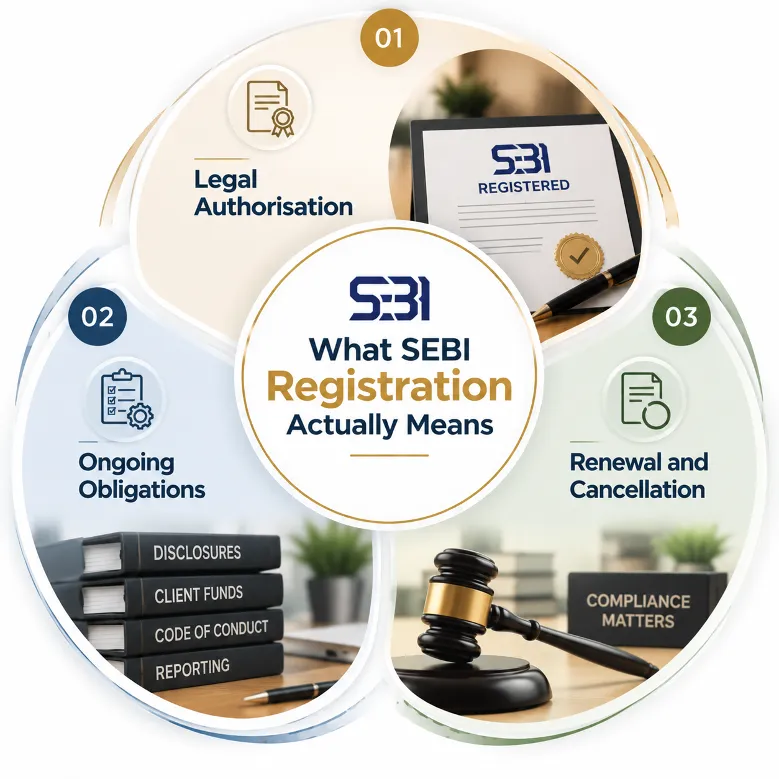
Legal Authorisation:
A registered portfolio manager has cleared SEBI’s eligibility criteria, capital adequacy, infrastructure, and a clean compliance history and holds a formal registration number, typically in the format INP0000XXXXX.
Ongoing Obligations:
Registration isn’t a one-time approval. Managers must file periodic disclosures, maintain client funds separately from their own, and follow SEBI’s code of conduct on fees, advertising, and reporting.
Renewal and Cancellation:
Registrations can be suspended or cancelled for non-compliance, which is why checking current status matters more than checking it once at the start of your relationship with a manager.
How to Check the SEBI Registered PMS List
Chanakya Capital Services, for reference, is registered with SEBI under Reg. No. INP000006040, a detail worth verifying independently rather than taking on faith, and the same standard should apply to any manager you’re evaluating.
Why Registration Status Alone Isn't Enough
Being on the list confirms a manager is legally permitted to operate — it says nothing about whether their strategy fits your goals. Two SEBI-registered managers can have entirely different philosophies, concentration levels, and risk approaches. Understanding how a manager actually builds a portfolio matters just as much as confirming they’re licensed to build one. See how Chanakya Capital’s investment philosophy shapes portfolio construction as one example of what that evaluation looks like in practice.
Red Flags Beyond the Registration Check
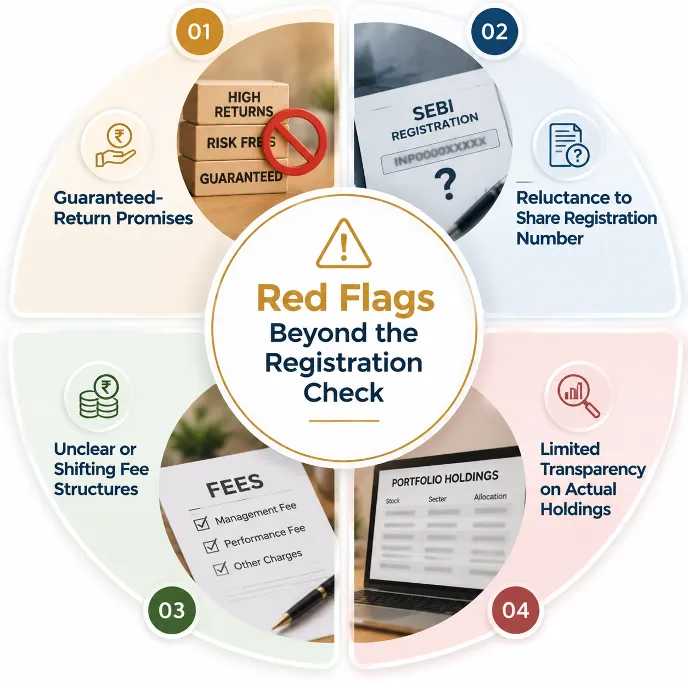
A few signals are worth watching for even with a valid registration: guaranteed-return promises (which SEBI explicitly prohibits), reluctance to share the registration number directly, unclear or shifting fee structures, and limited transparency on actual holdings. None of these show up on the registration list itself, which is why registration is a starting point, not the full due-diligence process. Our overview of Portfolio Management Services covers the broader questions worth asking before you commit capital.
FAQ
Frequently Asked Questions
1. What does it mean if a portfolio manager is SEBI-registered?
2. Where can I check the SEBI registered PMS list?
3. Is a SEBI registration number a guarantee of good returns?
4. Can a SEBI PMS registration be cancelled?
5. Is Chanakya Capital a SEBI-registered portfolio manager?
References
● SEBI Investor Guidance — Portfolio Management Services: https://investor.sebi.gov.in/pms_final.html
● Association of Portfolio Managers in India (APMI): https://apmiindia.org
