
First-principles investing starts with the business. What does it sell, who pays and why, what does it cost, how protected is the margin, where does the cash go. Thesis built from there not from peer multiples worked backward or consensus targets dressed up as independent research. Slower, less comfortable than owning what everyone else owns. But in Indian markets, where institutional money crowds into the same 100 names, that discomfort is where the return comes from.
According to the investment team at Chanakya Capital, a SEBI-registered portfolio manager, “first-principles isn’t a style. It’s a refusal to take someone else’s conclusion as a substitute for your own work. Most investors know the consensus view. Almost none have read the annual report.”
Looking for a manager who builds investment theses from business fundamentals rather than analyst targets?
What Does First-Principles Analysis Actually Look Like in Practice?
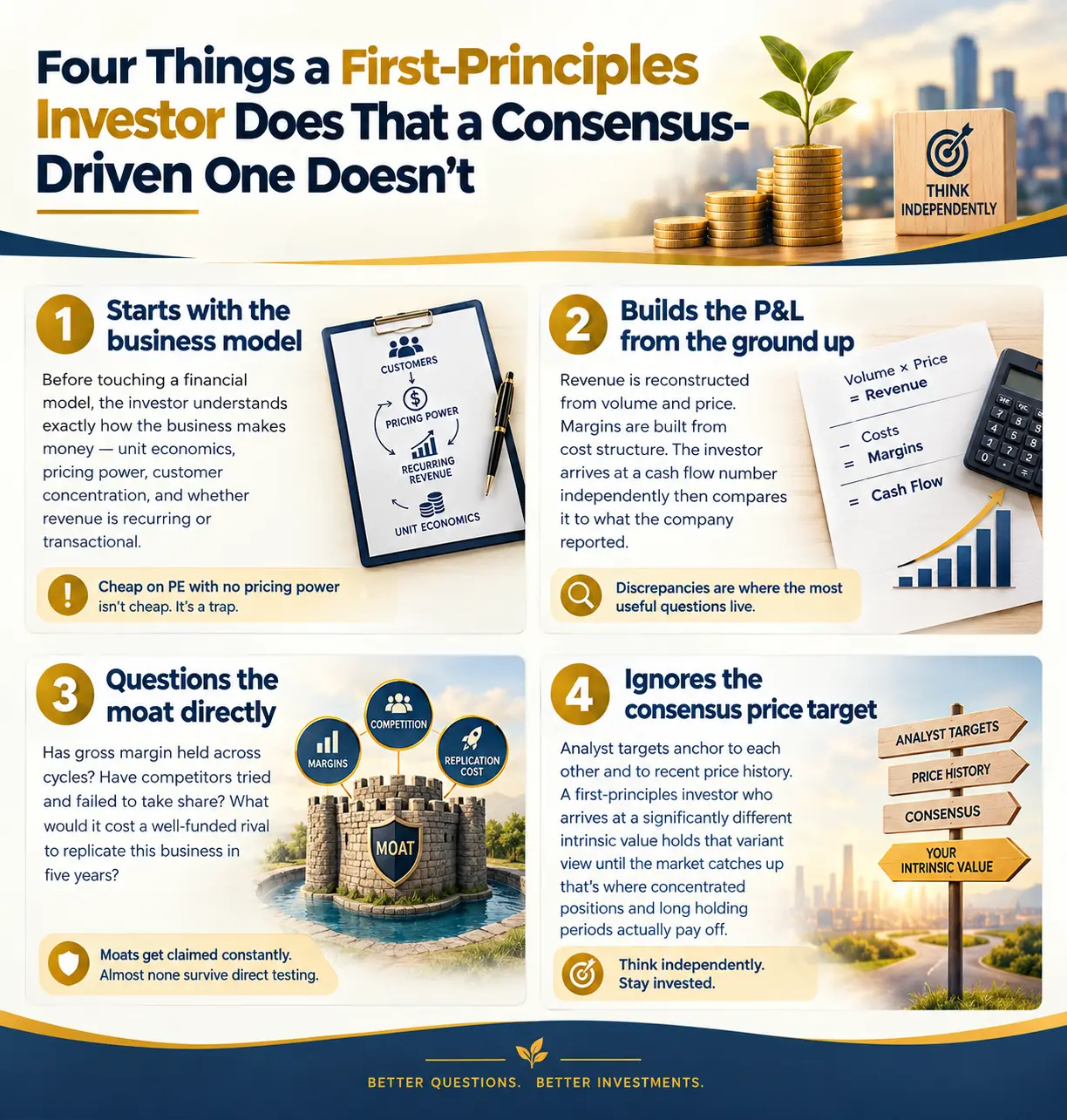
First-principles analysis takes longer than screening for cheap PE ratios. But it produces conviction that holds through a 30% drawdown because the thesis hasn’t changed, not because the stock stopped falling. See how Chanakya Capital builds investment theses from first principles
Why Does First-Principles Investing Work Better in Indian Markets?
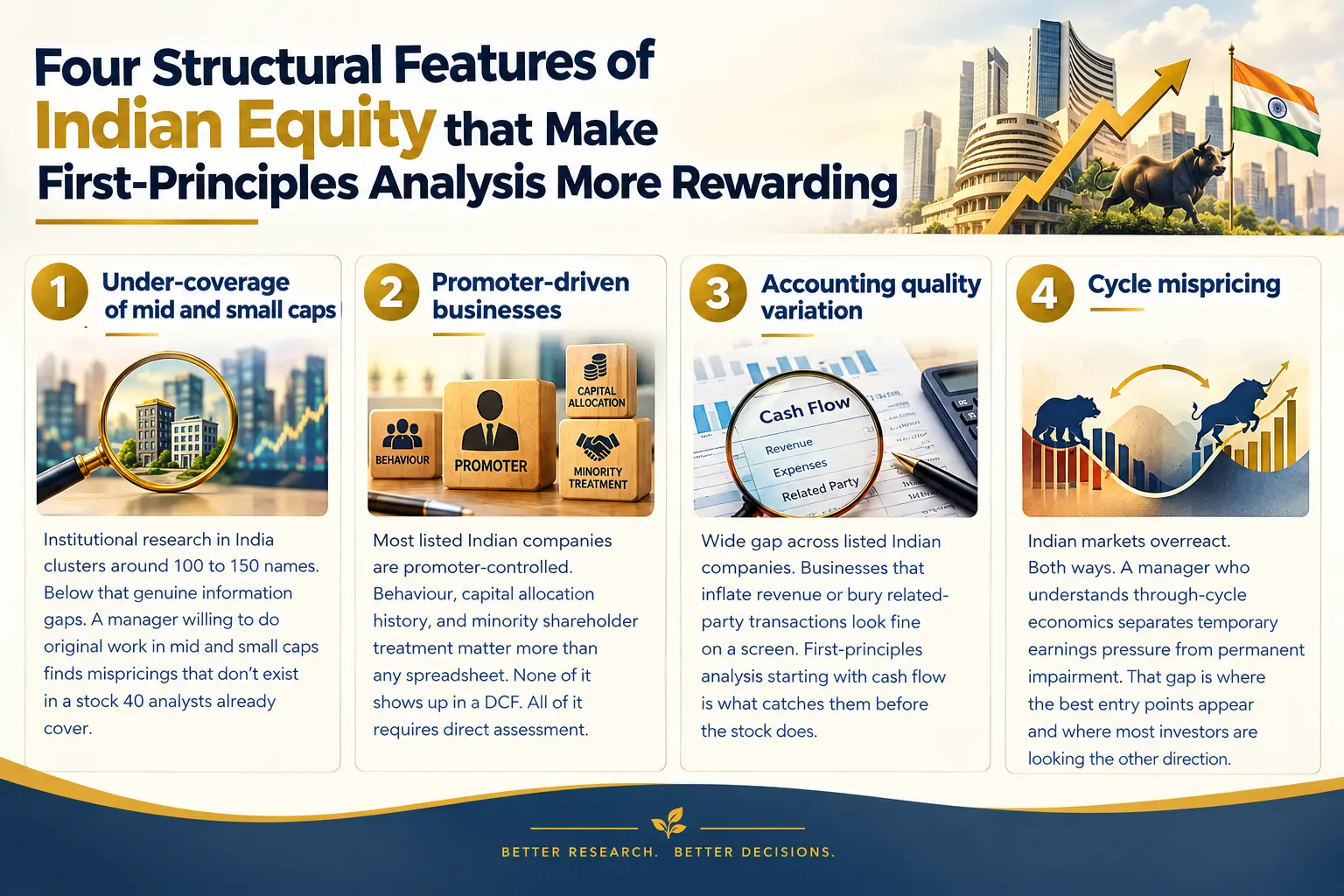
First-principles investing doesn’t need a proprietary dataset. Just better questions than the market is asking and the willingness to act before consensus catches up. That’s why cash flow beats earnings as the starting point: it’s harder to manipulate, closer to economic reality, and more likely to surface what the consensus is missing.
Why Choose Chanakya Capital?
Chanakya Capital Services Pvt. Ltd. is a SEBI-registered portfolio manager (INP000006040) is built around one thing: original analysis. No index weights. No broker targets. No consensus borrowed and repackaged as conviction. Every stock in the 12 to 18-position portfolio goes through a business model read, a cash flow reconstruction, a moat test, and a DCF stress test before anything is bought. That’s not a process description it’s a filter. Most ideas don’t survive it.
The team puts its own money in the same portfolio as clients. Every position. Every strategy. When that’s true, first principles stops being a philosophy. It becomes personal.
FAQ
Frequently Asked Questions
What is first-principles investing in simple terms?
Starting from the business’s actual economics not analyst targets, not peer multiples, not what the index says to own.
How is first-principles investing different from value investing?
Value investing identifies cheap stocks. First-principles investing is how you arrive at intrinsic value yourself without borrowing the number from someone else’s model.
Does first-principles investing work in Indian markets?
Better than most places. Mid and small caps are under-researched, promoters matter, and accounting quality is uneven. Original work gets rewarded here.
Why do first-principles investors run concentrated portfolios?
Because genuine conviction produces fewer ideas. Concentration isn’t a choice it’s what happens when you only buy what you actually understand.