

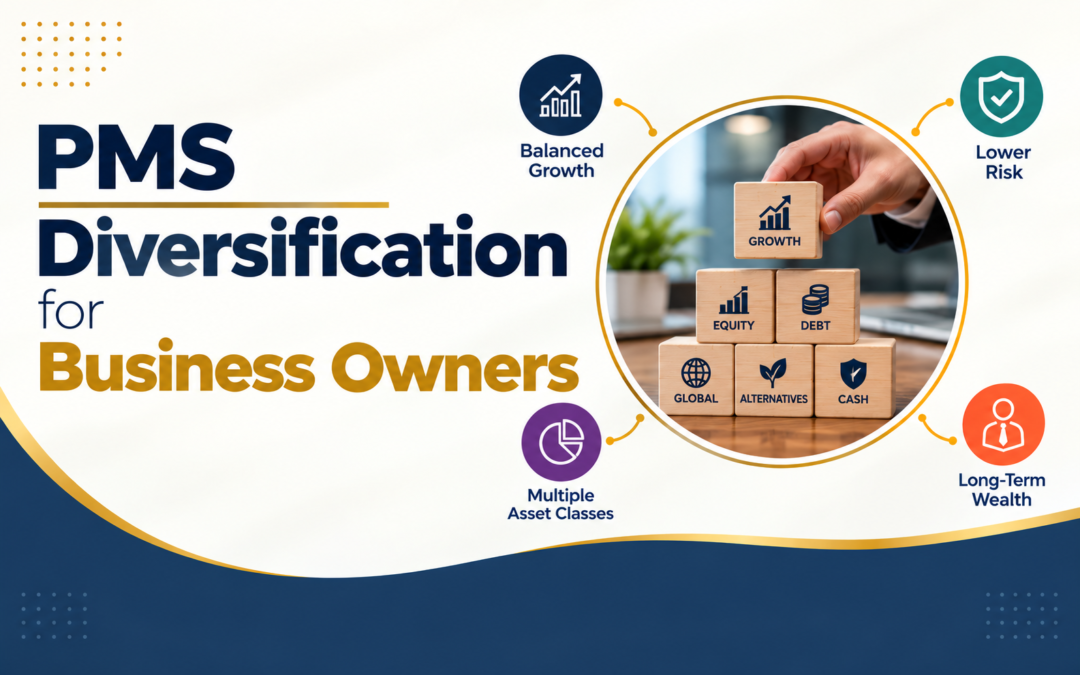
Business owners typically have 80 to 90% of their net worth tied up in one asset the business. That’s a single concentrated bet that generates income but offers no liquidity, no diversification, and no protection if the sector turns. PMS gives business owners a professionally managed listed equity portfolio in their own name, separate from the business, liquid, and run by a manager with no product to sell. It’s not about moving money out of the business. It’s about building a financial asset base alongside it that compounds independently.
According to the investment team at Chanakya Capital, a SEBI-registered portfolio manager, “most business owners we speak to have built something genuinely valuable but they’ve never paid themselves in assets, only in reinvestment. A PMS is often the first time their personal net worth starts compounding separately from the business.”
Running a profitable business but realising your personal wealth is entirely tied to its performance?
Why Is a PMS Specifically Suited for Business Owner Diversification?
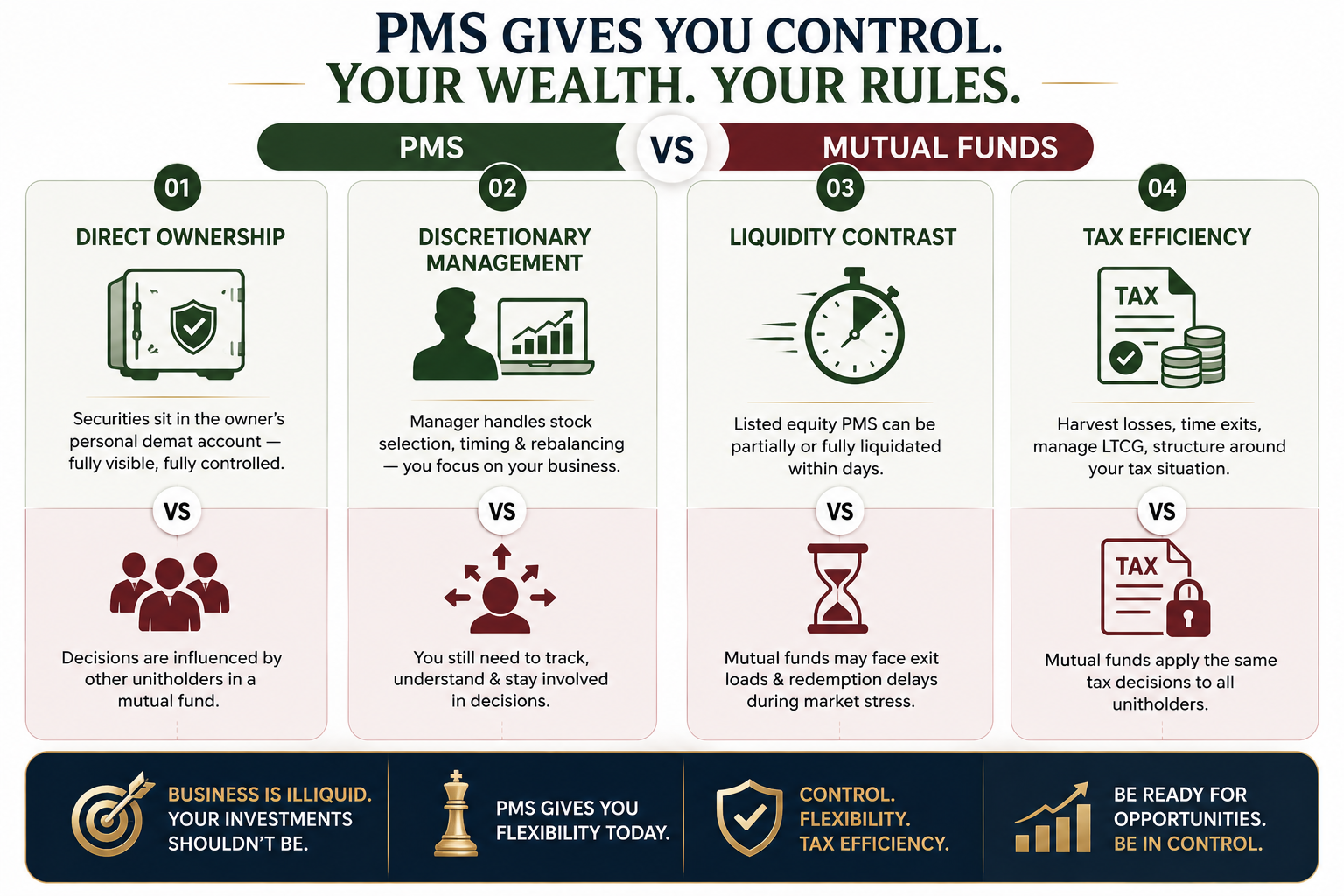
Four reasons why PMS fits the business owner’s situation better than most other investment products:
Business owners who’ve taken money out of the business but left it in FDs are losing real compounding time. A PMS puts that capital to work in a structure that matches how they already think about money. See who qualifies to invest with Chanakya Capital
What Should Business Owners Think About Before Starting a PMS?
Four practical considerations specific to business owners:
- Separating capital: Money going into a PMS should be personal capital the business won’t need for 3 to 5 years. Mixing working capital with a PMS portfolio creates liquidity mismatches that force bad exit decisions at the worst times.
- Starting allocation: Many business owners start with ₹50 lakh to ₹1 crore, evaluate the manager’s process over 12 to 18 months, and increase allocation as trust builds. The minimum is ₹50 lakh per SEBI’s PMS rules, accessible for most profitable SME owners.
- Succession context: A PMS portfolio passes to heirs as a clean, liquid asset without the operational complexity of transferring a business for owners thinking about the next generation; that distinction matters more than most realise.
- Manager selection: A business owner used to accountability and direct answers should apply the same standard to a PMS manager if they can’t explain every position clearly or deflect on drawdown history, that’s the same red flag as a supplier who can’t explain their pricing.
Getting the capital out of the business and into a separate compounding vehicle is the first move. Everything after that depends on how well the manager’s process holds up under the same scrutiny a good business owner applies to every other decision.
Why Choose Chanakya Capital?
Chanakya Capital Services Pvt. Ltd. is a SEBI-registered portfolio manager (INP000006040) managing concentrated listed equity portfolios for HNIs, business owners, NRIs, and family offices through onshore PMS and a Category III AIF at GIFT City IFSC. The portfolio runs 12 to 18 high-conviction positions, the team invests its own capital alongside clients, and every position has a written thesis the manager can defend without deflecting.
Business owners specifically get a portfolio that thinks the way they do: concentrated bets on businesses with real earnings, honest management, and a long runway. No index-hugging, no benchmark excuses, no product pushing. Just a manager who treats the capital with the same seriousness the owner used to build it.
FAQ
Frequently Asked Questions
Can a business owner invest business profits directly into a PMS?
No, a PMS requires personal investment in the individual’s name; business profits should first be drawn as personal income or dividend before investing.
What is the minimum amount to start a PMS in India?
SEBI mandates a minimum of ₹ 50 lakh per investor for any registered Portfolio Management Service.
Is PMS better than FD or real estate for business owner diversification?
For liquid, professionally managed equity exposure with tax efficiency, PMS outperforms both on flexibility and long-term compounding potential.
How is a PMS portfolio different from a mutual fund for a business owner?
PMS holds securities directly in the owner’s demat account with personalised tax management a mutual fund pools capital with no individual-level customisation.
