
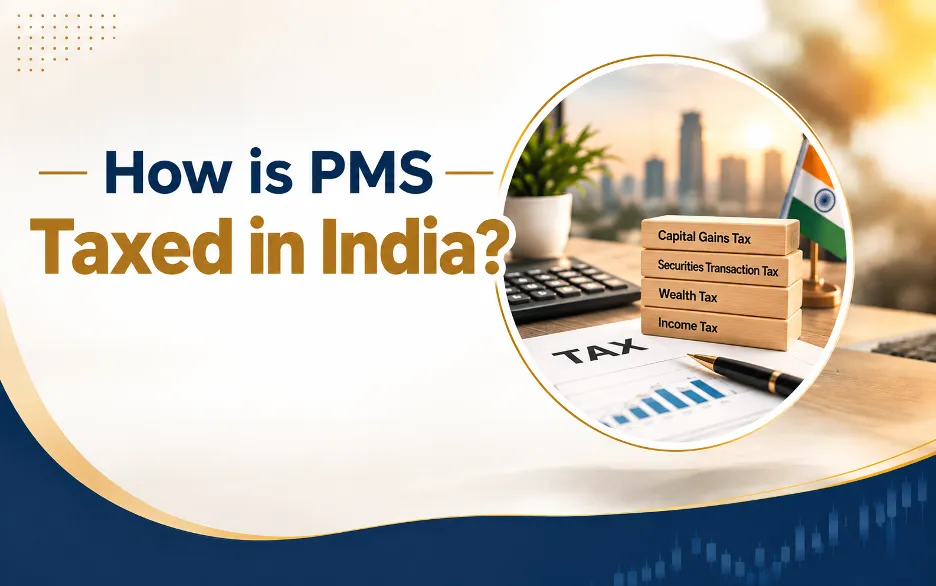
PMS investments are taxed exactly like direct equity, because the stocks sit in your own demat account rather than in a pooled scheme. Gains beyond ₹1.25 lakh held for over 12 months attract 12.5% Long-Term Capital Gains (LTCG) tax, while gains on positions held under 12 months attract 20% Short-Term Capital Gains (STCG) tax. Every buy and sell within the portfolio is a taxable event in your name, which makes a manager’s churn rate and holding discipline directly relevant to your tax outcome, not just an abstract strategy detail.
This distinction matters more than most investors realise: since PMS holdings are registered in your own name, taxation works differently from how many investors expect coming from mutual funds. Understanding this upfront avoids surprises at filing time and helps you evaluate a manager’s strategy with tax efficiency in mind, not just returns.
According to the team at Chanakya Capital, a SEBI-registered portfolio manager, “Investors often compare pre-tax returns across managers and stop there. A high-churn strategy and a low-churn strategy can post similar headline numbers but leave you with very different tax bills.”
Want to understand how your PMS gains will actually be taxed? Talk to Chanakya Capital’s team before you invest.
Why PMS Follows Direct Equity Taxation
Unlike a mutual fund, which pools investor money into scheme units, a PMS account holds individual stocks directly in your demat account. There’s no intermediary structure or NAV, you own the shares outright, and every transaction the manager makes on your behalf is treated as your own transaction for tax purposes. This is the core reason PMS taxation mirrors direct stock market investing rather than the scheme-level tax treatment applied to mutual funds.
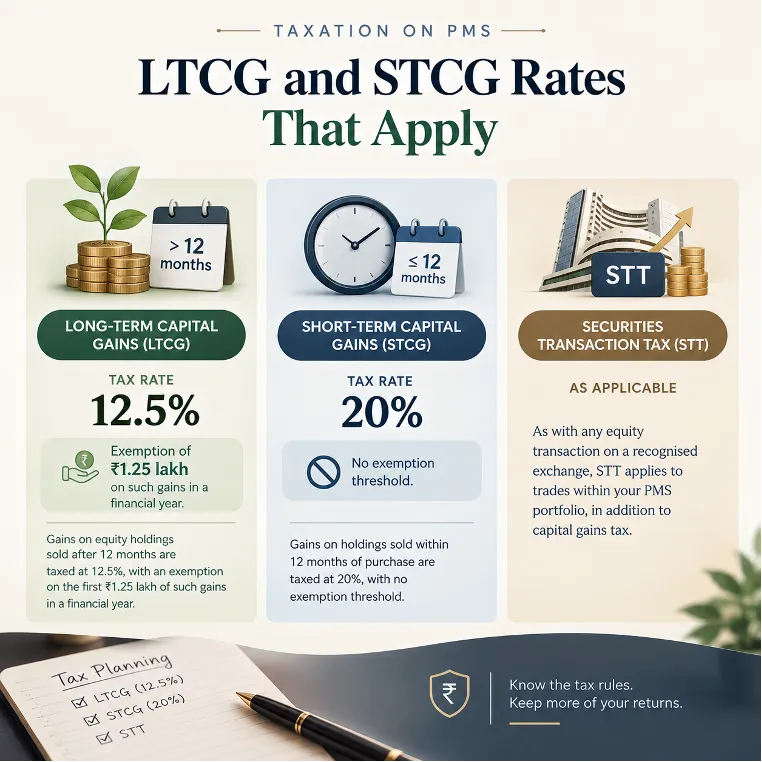
LTCG and STCG Rates That Apply
Long-Term Capital Gains (LTCG):
Gains on equity holdings sold after 12 months are taxed at 12.5%, with an exemption on the first ₹1.25 lakh of such gains in a financial year.
Short-Term Capital Gains (STCG):
Gains on holdings sold within 12 months of purchase are taxed at 20%, with no exemption threshold.
Securities Transaction Tax (STT):
As with any equity transaction on a recognised exchange, STT applies to trades within your PMS portfolio, in addition to capital gains tax.
How Portfolio Churn Affects Your Tax Outcome
A mutual fund’s portfolio is built for thousands of investors with different goals, which pushes it toward broad diversification and standardisation. A PMS portfolio is built for you, which means design choices — concentration, sector tilts, restricted stock lists, directly shape your outcome rather than being averaged out across a large pool. This is also why direct conversations with the actual manager, common at boutique PMS houses, matter: design decisions are easier to evaluate when you can ask the person making them. See how Chanakya Capital’s investment philosophy translates into these design choices in practice.
How PMS Reporting Simplifies Tax Filing
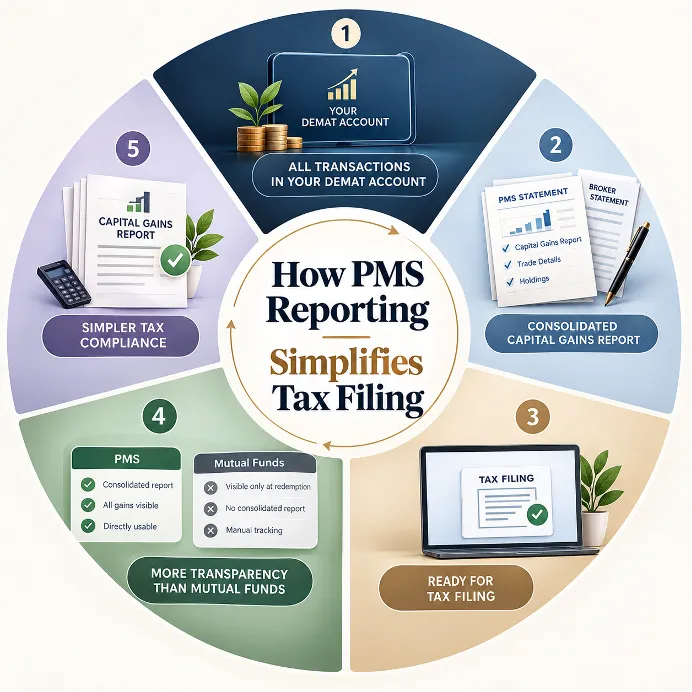
Because every transaction happens in your own demat account, your annual PMS statement typically includes a consolidated capital gains report you can use directly for tax filing, alongside your regular broker-issued statements. This transparency is one advantage over mutual funds, where gains are only visible at redemption. Our overview of Portfolio Management Services covers this reporting structure in more detail, and if you’re weighing PMS against the ₹50 lakh entry requirement, our guide on the minimum investment for PMS in India is worth reading alongside this one.
Have questions about how PMS taxation applies to your situation? Schedule a consultation with Chanakya Capital’s fund management team.
FAQ
Frequently Asked Questions
How is PMS different from mutual funds for tax purposes?
PMS holdings sit in your own demat account and are taxed as direct equity transactions, while mutual fund gains are taxed only at the scheme-unit level upon redemption.
What is the LTCG tax rate on PMS investments?
Gains held for over 12 months are taxed at 12.5%, with the first ₹1.25 lakh of such gains exempt in a financial year.
What is the STCG tax rate on PMS investments?
Gains on holdings sold within 12 months are taxed at 20%, with no exemption threshold.
Does a manager's churn rate affect my tax liability?
Yes. Frequent trading generates more short-term gains taxed at 20%, while longer holding periods shift gains into the lower 12.5% LTCG bracket.
Do I get a consolidated tax statement for my PMS investments?
Most managers provide an annual capital gains statement covering all transactions in your demat account, simplifying tax filing.
References
- SEBI Investor Guidance — Portfolio Management Services: https://investor.sebi.gov.in/pms_final.html
- Income Tax Department, Government of India: https://www.incometax.gov.in